dining benches buying guide
everything you need to know
a dining bench answers a question every Hong Kong dining room asks: how do you seat more people in less space?
chairs claim their floor area all day, whether anyone is sitting on them or not. a bench slides fully under the table the moment the meal ends, and the room opens up again.
that single habit is why benches have become one of the most practical seating decisions a Hong Kong apartment can make, and why we have been helping customers pair our benches with our dining tables for over 20 years. this guide walks through the five decisions that matter: whether a bench, chairs or a combination suits your table, the size that fits your space and your household, backless or backed, the material it is made from, and the second life a bench can lead elsewhere in the apartment.
1. a bench, chairs, or one of each?
one of the biggest considerations when deciding whether you should opt for dining chairs or benches is the dining area as a whole. in most Hong Kong apartments, the dining table sits close to a walkway, the kitchen or the living area, and every centimetre around it is circulation space for the whole household. while chairs occupy that space permanently, a bench tucks completely under the table when nobody is sitting on it. this means that the seating needs no clearance at all for most of the day and the floor it would have occupied is handed back to the room, which is ideal when space is at a premium (and when the table is pushed against the wall in a small apartment).
capacity works in the bench’s favour too. chairs seat one person each, full stop. a bench seats however many people can share it, and that number stretches: three adults on a 160cm bench could easily accommodate four adults and a child, without a single extra piece of furniture.
we find that customers often change their mind after realising that our table can be paired with two chairs on one side and a long bench on the other. they find that they can keep the space efficiency and the flexible capacity where the room is tightest, and individual back support where there is space for it. if you are still weighing up the table itself, our dining tables are the natural starting point; the bench decision gets much easier once the table’s size and shape are settled.
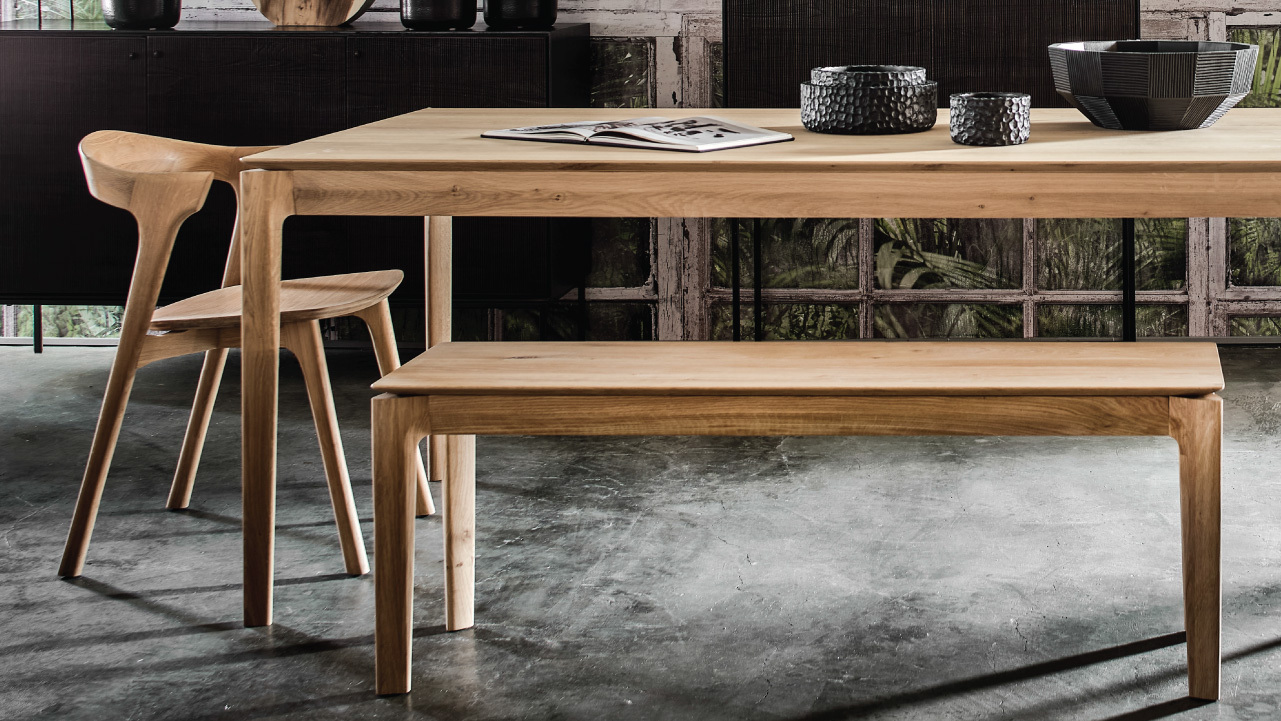
the Hong Kong case for a bench
a dining chair needs roughly half a square metre of floor, all day, every day. four chairs claim two square metres whether anyone is home or not. a bench holding the same three or four people disappears under the table between meals, and in a Hong Kong apartment, floor you get back for most of the day is floor you effectively did not pay for.
2. size: length, seat height and how many people fit
with benches, size is three questions rather than one: how long, how high, and how many people. the length question is anchored to your table. as a general guide, choose a bench around 30 to 50cm shorter than the table so it sits comfortably between the table legs and slides under without catching; if your table has legs at the corners, the bench needs to fit between them, so measure that gap rather than the tabletop.
bench length for your table: a general guide
| table length | bench length | seats (adults) |
|---|---|---|
| 140 cm | 100–120 cm | 2 |
| 160 cm | 120–140 cm | 2–3 |
| 180 cm | 140–160 cm | 3 |
| 200 cm + | 160–180 cm | 3–4 |
seat height is the measurement people forget, and it decides whether the bench is comfortable at the table at all. a standard dining table is 75–78cm tall, and as a general guide you want around 30cm between the seat and the tabletop, which points to a seat height of 45cm or so. our benches are 50–200cm long with seat heights of 37–48cm across the range: the upper end is calibrated to sit comfortably at standard dining table height, while lower designs suit entryways and bedroom placements, which we come to later. widths are 23–48cm, so there is a footprint for genuinely narrow spots as well as deeper, cushioned seats.
for capacity, allow roughly 60cm of bench per adult as a general guide; closer to 50cm works among family. that is the arithmetic behind the table above, and it is deliberately conservative: benches flex upwards for a crowded birthday dinner in a way a row of chairs never can.
TREE benches: the range at a glance
50–200 cm
length
23–48 cm
width
37–48 cm
seat height
2–4+
people based on length
before deciding, mark the bench’s footprint on the floor in masking tape, slide-out position included, and live with it for a day. and if you would rather judge scale in person, our 25,000 sq ft showroom at Horizon Plaza, Ap Lei Chau holds the widest selection of benches in Hong Kong, set up at made-up tables so you can sit, slide and measure for real.
3. backless or backed?
most dining benches are backless, and for good reason: a backless bench tucks fully under the table, keeps sightlines across the room open, and avoids the visual weight of a row of chair backs. in a compact dining area that lightness matters; the room reads as larger because your eye travels over the bench rather than stopping at it. a backless bench is also the more versatile piece, equally at home at the table, in the entryway or at the foot of a bed.
backed benches typically aren’t used in dining settings, and are often styled in the bedroom or entryway. if you opt to pair a backed design in your dining area, it’s important to note that it often will not slide under the table, so it earns its place best against a wall, where it can double as banquette-style seating. if the people who sit longest at your table value back support, one backed side and chairs opposite is a comfortable compromise.
comfort on a backless bench is mostly a question of the seat itself. many of our benches come without seat cushions (but can be added as an option), but posture on a bench is naturally more upright and sociable; guests lean into the table rather than away from it. if you do prefer a softer seat, you could add a cushion to your bench or incorporate upholstered chairs on the other side of your dining table for a bit of variety.
we also offer custom-made designs in solid reclaimed teak if you have a specific design and dimension in mind – just let us know what you’re looking for!
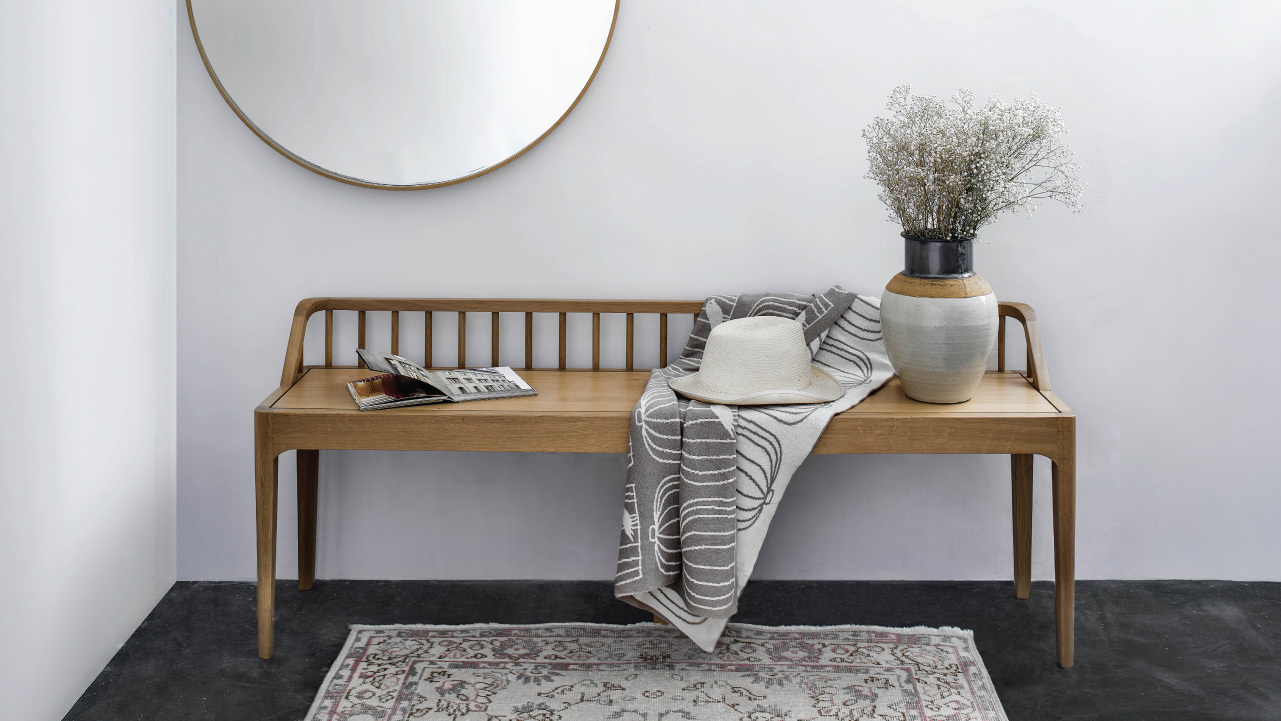
backless vs backed: which suits your space?
| backless | with back | |
|---|---|---|
| tucks under the table | fully | typically does not |
| visual weight | lightest; keeps sightlines open | reads as a fixed piece |
| best position | walkway side of the table | against a wall |
| comfort | upright, sociable; cushions add softness | supported for long dinners |
| second life elsewhere | entryway, foot of bed, living room | mostly seen in entryways and bedrooms (foot of bed) |
4. wood, upholstery and material
a bench is a small commitment of floor space but a long commitment of use, so the material decides how it ages. every timber we work with is treated throughout sourcing and production to be at home in Hong Kong conditions. our benches are produced in Indonesia, Serbia and Vietnam by workshops that share the same commitment to sustainability and quality that we hold ourselves.
the materials we work with
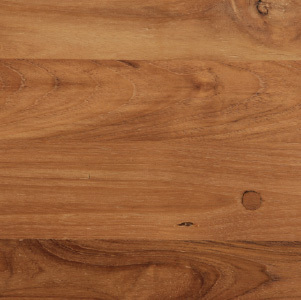
reclaimed teak
weathered surfaces, elegant textures and original markings. salvaged timber: no new trees felled.
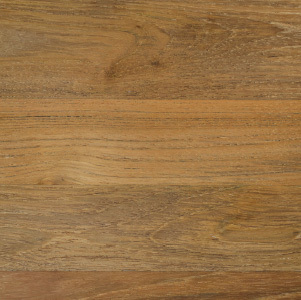
FSC™-certified solid & plantation teak
consistent golden-brown tones; a more uniform grain. certified from responsibly managed forests.
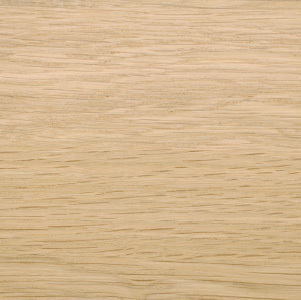
European oak
light, creamy tones with subtle golden-brown grain and a fine, even texture.
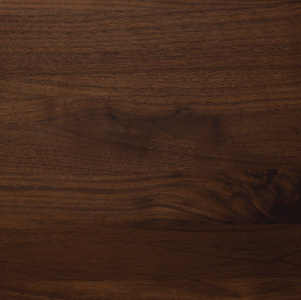
American walnut
deep chocolatey tones with ripples of lighter honey swirled through. a dense, stable hardwood.

mahogany
deep brown hues that give way to a rich, warm and inviting look.
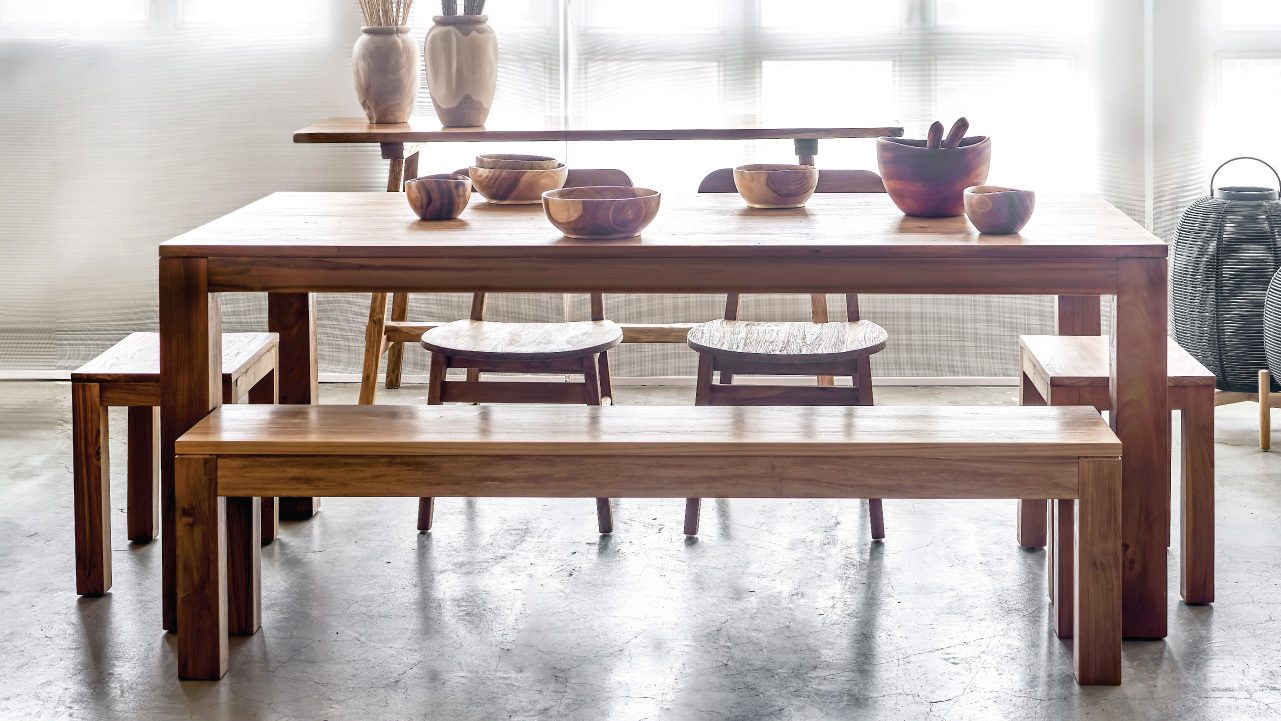
reclaimed teak. we work closely with our longstanding partner dBodhi, whose collections use wood salvaged from century-old Indonesian houses, properly documented and hand-sorted by craftsmen before it is repurposed. weathered surfaces and original markings make each bench truly one of a kind, and centuries of natural conditioning leave the timber dense and climate-stable: a characterful choice for relaxed, wabi sabi inspired dining rooms.
FSC™-certified solid and plantation teak. consistent golden-brown tones and a cleaner, more uniform grain, certified from responsibly managed forests. it shares teak’s warmth, density and natural moisture resistance with a more even look, for classic and contemporary rooms.
European oak. light, creamy tones with subtle golden-brown grains and a fine, even texture; prized for strength, stability and a natural resistance to wear. the natural partner for japandi, Scandinavian and minimalist dining rooms, with some collections stained black for a darker look.
American walnut. for those who love a rich, dramatic look, consider walnut wood, which has deep chocolatey tones interspersed with ripples of lighter honey. it is a dense, stable hardwood that complements contemporary and mid-century interiors alike.
mahogany. a tropical hardwood renowned for its durability, straight grain and deep brown colour that deepens with age. naturally resistant to moisture changes, which makes it well suited to Hong Kong homes, and sustainably sourced.
across the range you will find clean minimalist lines, subtle curves, vintage-inspired details and the expert joinery that lets a slim silhouette carry three adults for decades. upholstered seats come in a wide range of fabrics and colours, so the bench can match the table, the chairs or neither.
materials at a glance
| material | appearance | best style | sustainability |
|---|---|---|---|
| reclaimed teak | weathered, characterful; every piece unique | wabi sabi, rustic, relaxed | salvaged: no new trees felled |
| FSC™-certified and plantation teak | golden-brown; consistent grain | classic, contemporary | FSC™-certified forest management, well-managed forests |
| European oak | light, creamy; fine even grain (black stain available) | japandi, Scandinavian, minimalist | responsibly sourced |
| American walnut | deep chocolatey tones; lighter honey hues | rich, dramatic | responsibly sourced |
| mahogany | deep brown; deepens with age | traditional, warm, characterful | responsibly sourced |
Kate Babington, Managing Director at TREE
“a dining bench brings an effortless warmth to the dining space, creating a more relaxed, communal atmosphere where everyone can gather comfortably – and when an unexpected guest arrives, it makes room with ease. for compact Hong Kong homes, its versatility is especially valuable: simply tuck it neatly beneath the dining table when not in use, freeing up precious floor space while keeping the room feeling open and uncluttered.”
5. beyond the dining table
a bench is the rare piece of dining furniture that does not have to stay in the dining room. in the entryway, a 50–100cm bench gives you somewhere to sit while putting on shoes, with room beneath for baskets or slippers. at the foot of a bed it holds tomorrow’s clothes and gives the bedroom a finished, hotel-like calm. in the living room it offers extra seating that never looks like a spare chair waiting for a party.
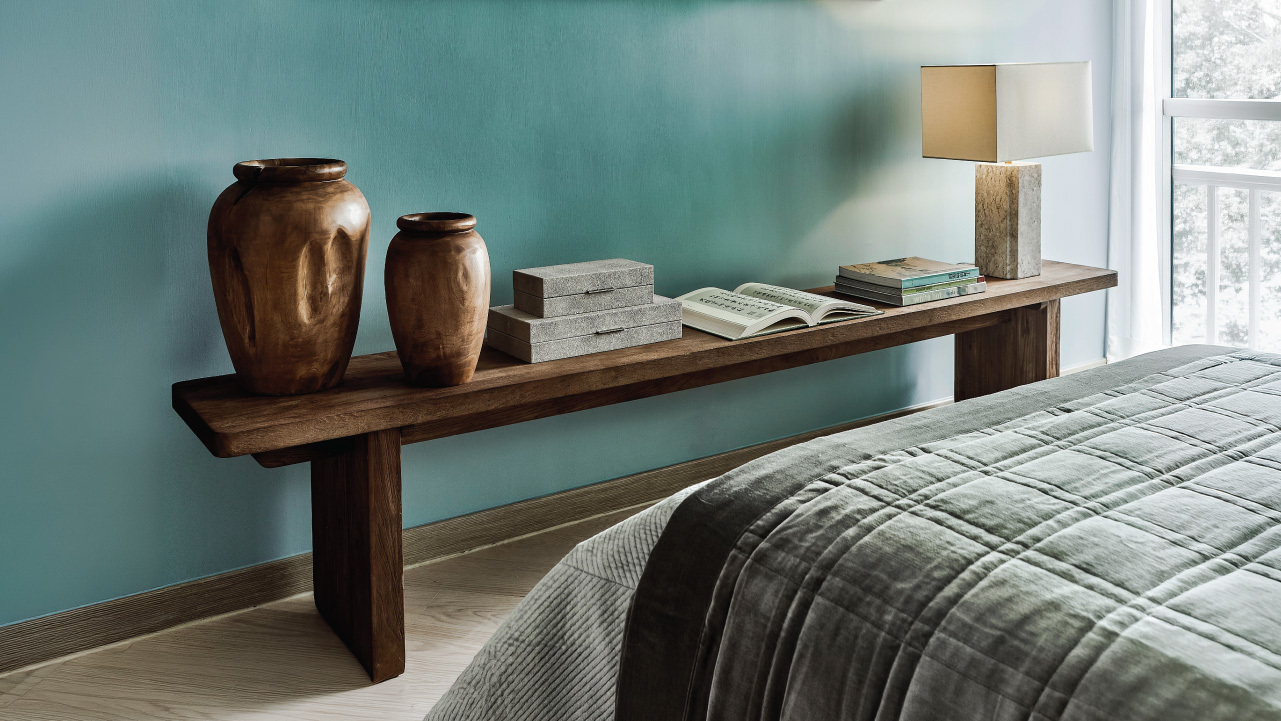
that flexibility is worth weighing when you choose. a backless bench at dining seat height moves between these roles effortlessly, which is why some customers buy a second one once they see what the first can do. we look at these placements in more detail in our library article on the versatility of the seating bench; for this guide, the point is that a dining bench is never only a dining bench, and in an apartment where every piece must earn its place, that is a genuine advantage.


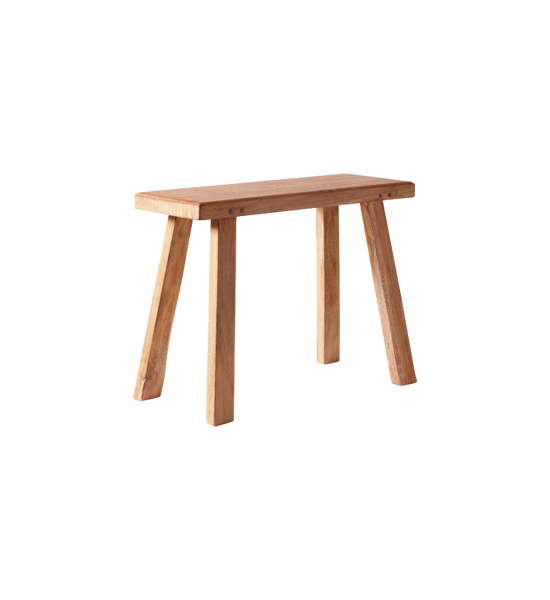
6. caring for your bench in Hong Kong
a solid wood bench asks very little of you. day to day, care is a wipe with a slightly damp cloth to lift dust, and because a bench spends much of its life under the table, it collects less of it than you would think. solid wood needs to stay hydrated in Hong Kong conditions, and our timbers are sourced and treated with exactly those conditions in mind, so the routine below is about helping the wood settle into its seasons rather than defending it.
Hong Kong · Spring care
Spring in Hong Kong can get particularly humid, with indoor humidity spiking above 90%, and that is when your bench appreciates a little extra care. a dehumidifier or air conditioner keeping the room between 50% and 60% sees the season out comfortably, and any seat cushions benefit from it as much as the timber does.
- keep dust off: wipe the frame and seat with a slightly damp cloth; include the underside rails every few weeks, since a bench that slides under the table gathers dust where you least look.
- give the wood steady conditions: solid wood is happiest with stable temperature and humidity, so position the bench out of a direct air conditioning draught and let the room breathe.
- keep it hydrated in Winter: if you run home heating in the cooler months from November to March, a cup of water placed nearby helps maintain ambient humidity while the air is dry.
- run a dehumidifier in Spring: aim for indoor humidity of 50–60% during the humid season; the timber, the joinery and any upholstered cushions all benefit.
- fluff and rotate seat cushions: if your bench has cushions, fluff them regularly to help them keep their shape; a gentle change of shape over time is normal, and rotating them evens out everyday use.
our TREEtment manual covers all of this in detail, from everyday cleaning to seasonal routines; download it on our after care page. and if you are ever unsure what your bench needs, our team is always happy to talk it through for your specific home.
how tall should a dining bench be?
as a general guide, look for around 30cm between the seat and the underside of the tabletop. a standard dining table is 75–78cm tall, which points to a seat height of roughly 45cm. our benches have seat heights of 37–48cm across the range: the upper end is made for the dining table, while lower designs suit entryways and bedrooms. if you already own the table, measure it first; the bench should fit the table you have, not the average.
how long should a dining bench be?
around 30 to 50cm shorter than your table, as a general guide, so it slides under cleanly between the legs. for a 160cm table that means a bench of roughly 120–140cm; for a 180cm table, 140–160cm. if the table’s legs sit at the corners, measure the gap between them rather than the tabletop length. our benches are 50–200cm long, so there is a length for every table in the range.
how many people can sit on a dining bench?
allow roughly 60cm per adult as a general guide, so a 120cm bench seats two comfortably and a 180cm bench seats three. the honest answer is that benches flex: family and children sit closer, and a bench that formally seats three regularly holds four when it needs to. that flexibility is one of the strongest reasons Hong Kong households choose a bench over a fixed number of chairs.
is a dining bench better than chairs?
it depends on how your dining space works. a bench wins on space, because it tucks fully under the table and needs no clearance between meals, and on capacity, because it seats people rather than a fixed count. chairs win on individual back support and are easier to move around the apartment. many of our customers land on one bench plus chairs: the bench on the tight side of the table, chairs where there is room for them.
will a bench fit completely under my table?
a backless bench will, provided two measurements line up: the bench must be shorter than the gap between the table legs, and the seat must clear the table’s apron, the rail beneath the tabletop. check both before you buy, especially with chunkier table designs. a backed bench will not tuck under; it belongs against a wall. this tuck-under habit is the heart of the bench’s space case in Hong Kong apartments.
are backless dining benches comfortable?
more comfortable than people expect, particularly with a cushioned seat; many of our benches come with or without plush seat cushions in a wide range of fabrics. posture on a backless bench is naturally upright and sociable, and for the length of a normal meal most people never miss the back. for long, lingering dinners, pair the bench with backed chairs on the other side so anyone who wants support has it.
can a wooden bench handle Hong Kong humidity?
very comfortably. every timber we use is treated throughout sourcing and production for Hong Kong conditions, our reclaimed teak has already spent a century acclimatising in tropical Indonesia, and mahogany is naturally resistant to moisture changes. we have been selling solid wood furniture in Hong Kong for over 20 years; we would not work with materials that could not live here.