armchairs buying guide
everything you need to know
a sofa belongs to the household; an armchair belongs to you. it is the seat you drift to with a book, the one that catches the morning light, the piece that gives a corner of the apartment a reason to exist.
in Hong Kong homes, where a single chair often has to earn its floor space as hard as any larger piece, choosing well matters more than most guides admit.
we have spent over 20 years helping Hong Kong customers find that one seat, and the same four questions come up every time: what you want the chair to do, whether it genuinely fits, how it sits with the sofa it may share a room with, and how it feels after an hour rather than a minute. this guide walks through each in turn, along with the frame beneath the fabric and how to care for it all in our climate.
1. what do you want the armchair to do?
when looking for the right armchair, consider what its main purpose is in your space. an armchair bought for reading is a different purchase from one bought to complete a conversation circle, and different again from an accent piece chosen to give a room a focal point. our range covers the full spread: from sleek minimalist designs and subtle curves to vintage-inspired classics, with or without arms, in plush upholstery or handwoven detail. the styles themselves are a subject we have already written about; our library article on types of armchairs walks through wingbacks, swivels, mid-century and curved designs in full. here, what matters is matching the design to the role.
four roles for one chair
| role | what to look for | where it lives |
|---|---|---|
| reading chair | supportive back, a seat you can settle into for an hour, near natural light | a bedroom corner, beside a window |
| lounge / easy chair | enveloping silhouette, relaxed seat angle, room to curl up | the living room, angled towards the view |
| accent piece | a shape or texture the room lacks: a weave, a curve, a darker timber | an entryway, a bare corner, beside a bookshelf |
| the second seat | a height and scale that talks to the sofa, facing or angled towards it | the living room, closing the circle |
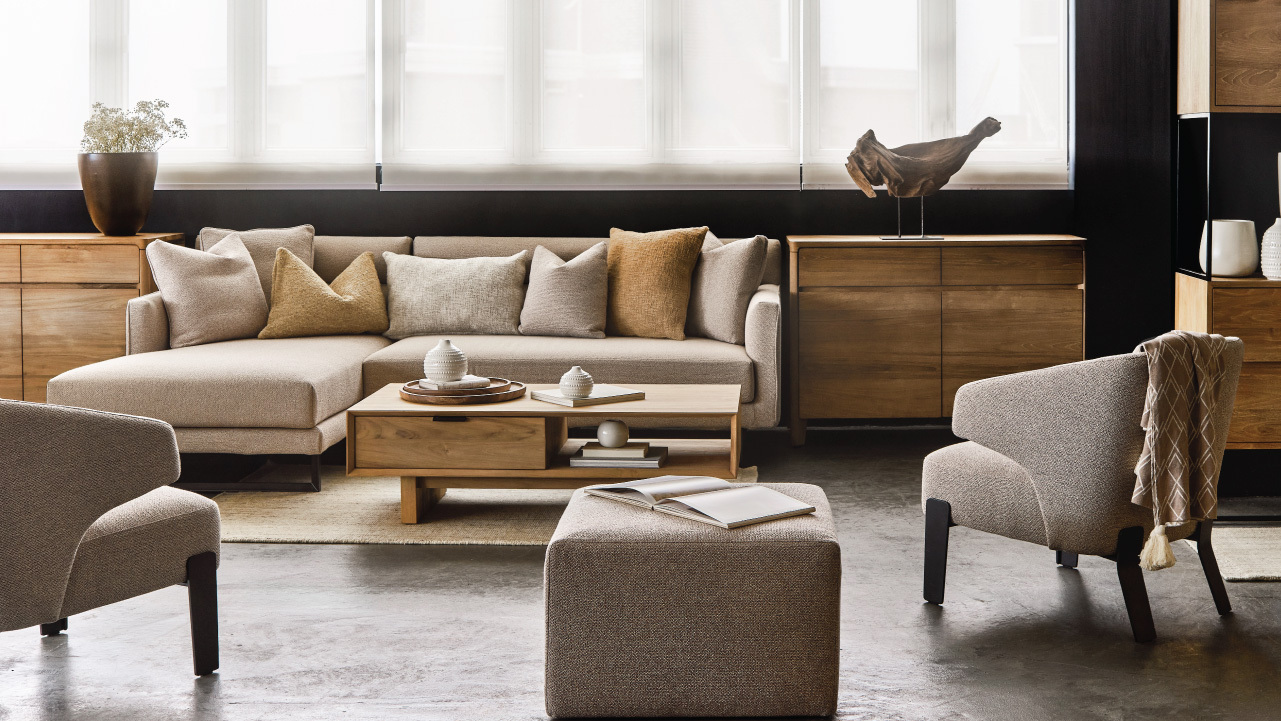
one chair can hold more than one of these jobs, and in a compact apartment it usually has to. a lounge chair in the bedroom is a reading nook by night and a place to lay tomorrow’s clothes by morning; an accent chair in the entryway is somewhere to put shoes on and a welcome in its own right. small home offices gain more from a good easy chair than most people expect: somewhere to think that is not the desk.
shop armchairs


2. one seat, measured honestly
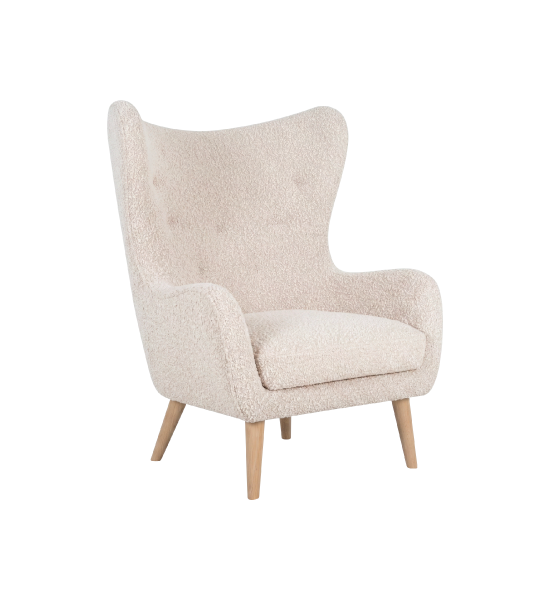
an armchair looks small on a showroom floor and grows the moment it enters a Hong Kong living room, so the numbers matter. our armchairs are generally 53–64cm wide, whilst the wider family of lounge and easy chairs is 59–115cm: at the narrow end, a chair that slips into a corner a sofa could never reach; at the wide end, a generous seat that anchors a room on its own. seat heights on our lounge and easy chairs are generally 38–46cm, which covers everything from a low, relaxed sit to an upright height that makes standing effortless.
armchair dimensions at a glance
| measurement | our range | worth knowing |
|---|---|---|
| armchair width | 53–64cm | the classic single-seat footprint |
| lounge / easy chair width | 59–115cm | compact designs sit at the narrow end |
| seat height | 38–46cm | lower feels relaxed; higher is easier to rise from |
the advantage of the armchair is that it fits where nothing else will. a chair at the narrow end of that range asks less of a room than any other piece of upholstered furniture, which is why the armchair is so often the answer in a compact apartment: it adds a genuine second place to sit without asking the room to reorganise itself. this is the case for most of our customers who come in looking for an armchair: they tend to choose a piece that works with their existing space and layout, rather than opting for a larger design that would require them to rework their room. we’ve also found that many customers are looking for an armchair for their bedroom, which means they typically prefer a piece that is narrow enough to fit comfortably through corridors and doorways.
we covered room clearances and delivery routes properly in our sofas buying guide; a single chair rarely raises those questions, and that is part of its appeal.
3. pairing with a sofa, or standing alone
most armchairs live with a sofa, and the pairing question is the one we hear most often: should they match? matching sets feel ordered and calm, while a contrasting chair offers a bolder look: a woven or wood-framed chair beside an upholstered sofa gives the room texture it cannot get any other way, and a darker or more vibrant fabric on one chair is a far smaller commitment than the same fabric across three seats. the reliable rule is to keep one thread in common – be it a tone, a timber, or a leg shape – and let everything else differ.
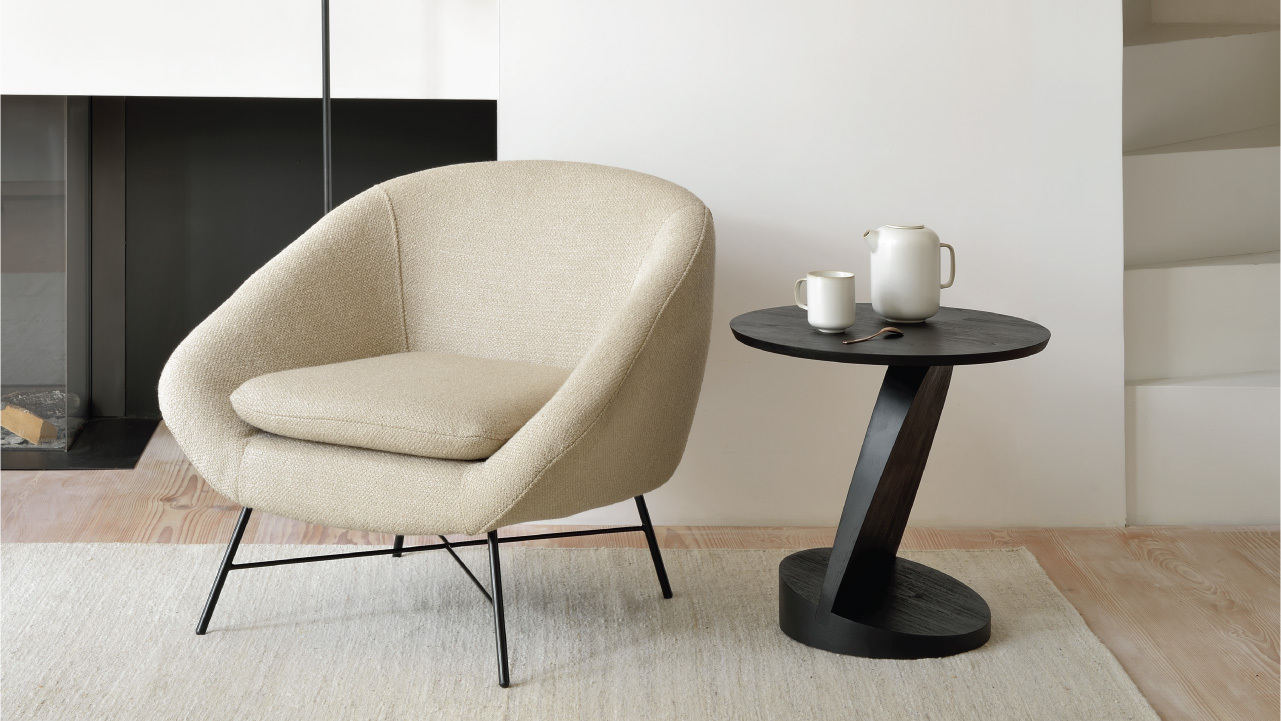
placement does as much work as the pairing. a chair facing the sofa closes the conversation circle; angled towards the window, it opens the room instead of boxing it in. an armchair also stands happily alone: in space-conscious apartments, one characterful chair beside a side table can do the work of a full seating arrangement. our sofas, coffee tables, side tables and tv cabinets are made to sit alongside our chairs, and the full range of sofas & armchairs is there to browse when you want to see how the pieces converse.
4. comfort in a single seat
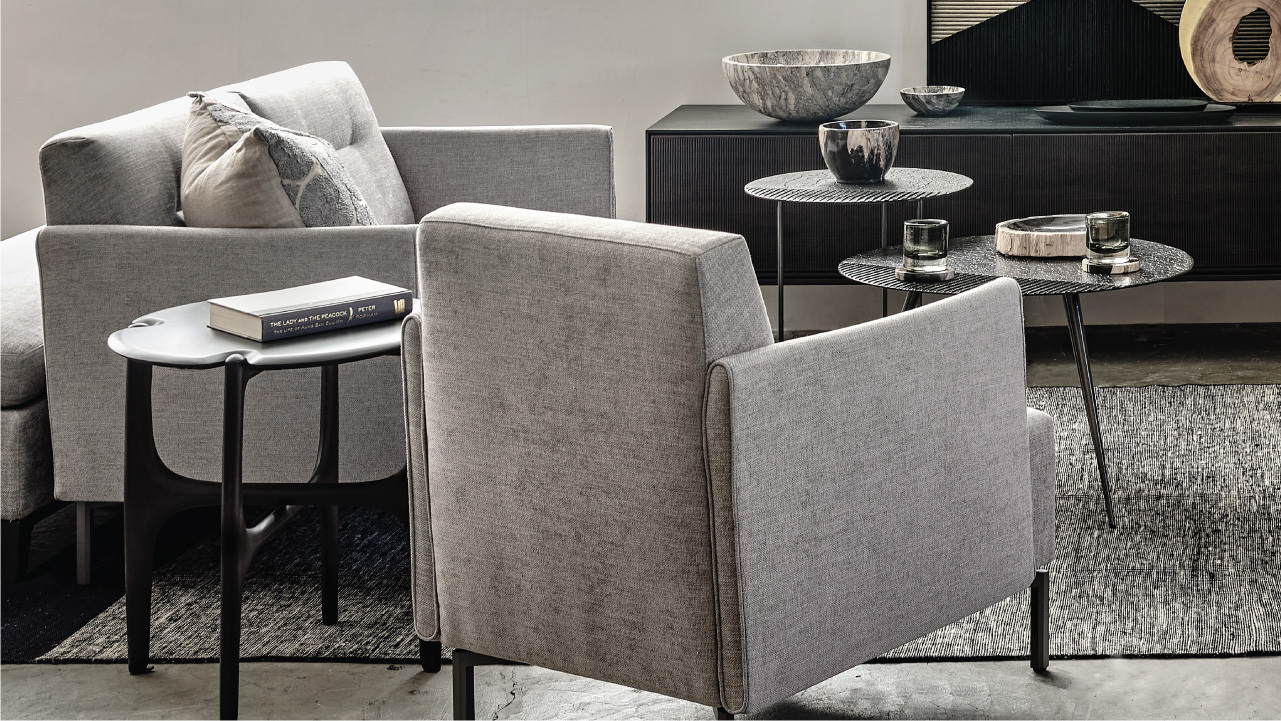
the comfort of an armchair is highly personal and often depends on how the piece will be used. an upright reader wants a supportive back and a seat height towards the top of the 38–46cm range; someone who curls up wants an enveloping silhouette, a wraparound back and a seat with room to tuck legs in. arms are a genuine choice, not a default: armless designs feel lighter and slip into smaller corners, whilst full arms give you somewhere to rest a book, an elbow, a cup.
beneath the fabric, our upholstered pieces carry comfortable cushions on well-made frames, with the majority of our upholstered seating using high-resilient foam that springs back rather than settling. fabric matters too, and our fabrics carry abrasion ratings of 20,000 rubs (Martindale test) or more. we offer a wide range of in-stock lounge and easy chairs available for immediate delivery, but you can pre-order and customise your piece using our wide assortment of fabrics and colours. choosing between all of this is a ten-minute job in person and nearly impossible from a photograph, which is why the sit test at our 25,000 sq ft showroom at Horizon Plaza, Ap Lei Chau settles more armchair decisions than anything on this page.
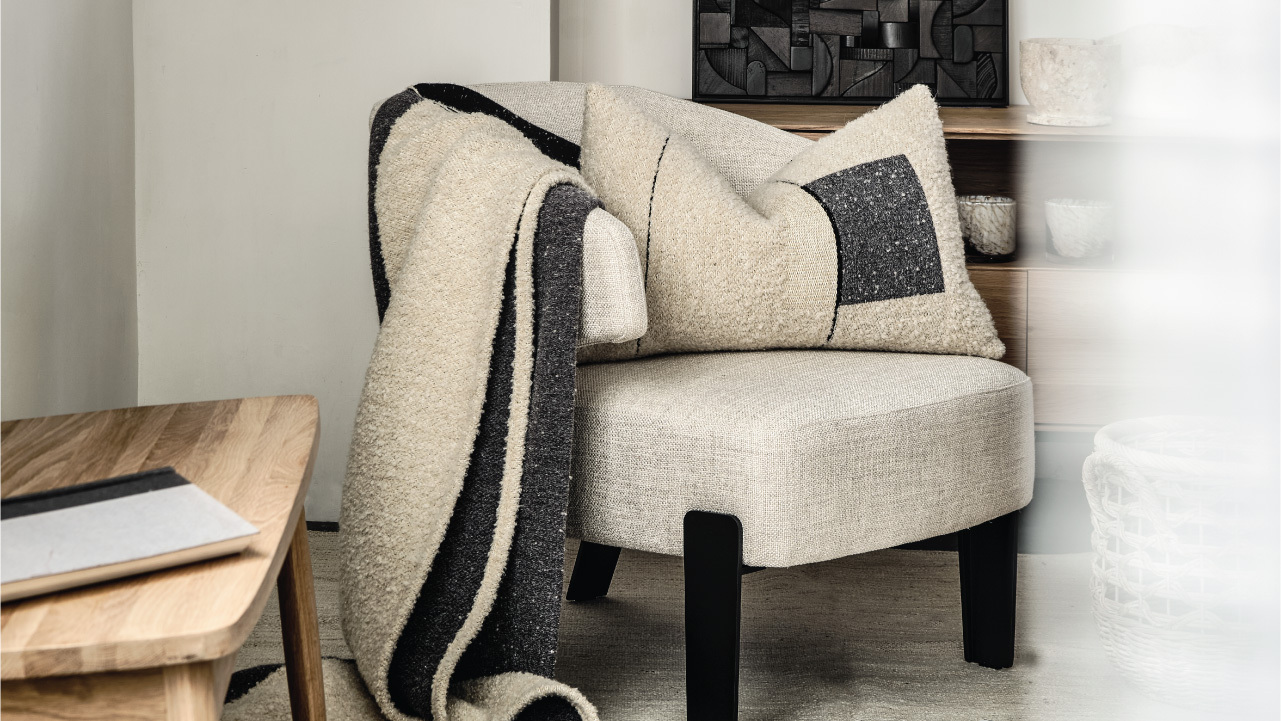
5. the frame: wood, weave and where it comes from
what separates a chair you keep from a chair you replace is usually the frame. most of our armchairs are beautifully crafted with a solid birch wood frame, paired with high-quality foam and durable upholstery. the result is a sturdy, well-made piece designed to last you for many years to come. we also offer chairs with legs constructed from solid reclaimed teak that has been salvaged from century-old Indonesian houses. some designs use FSC™-certified kraft paper woven in the traditional Lloyd Loom technique, a craft that has furnished homes for over a century and brings a lightness and texture no upholstery can imitate. our sofas are produced in Indonesia, Serbia, Vietnam, Poland and China, and we hold every one of those workshops to the same standards we hold ourselves.
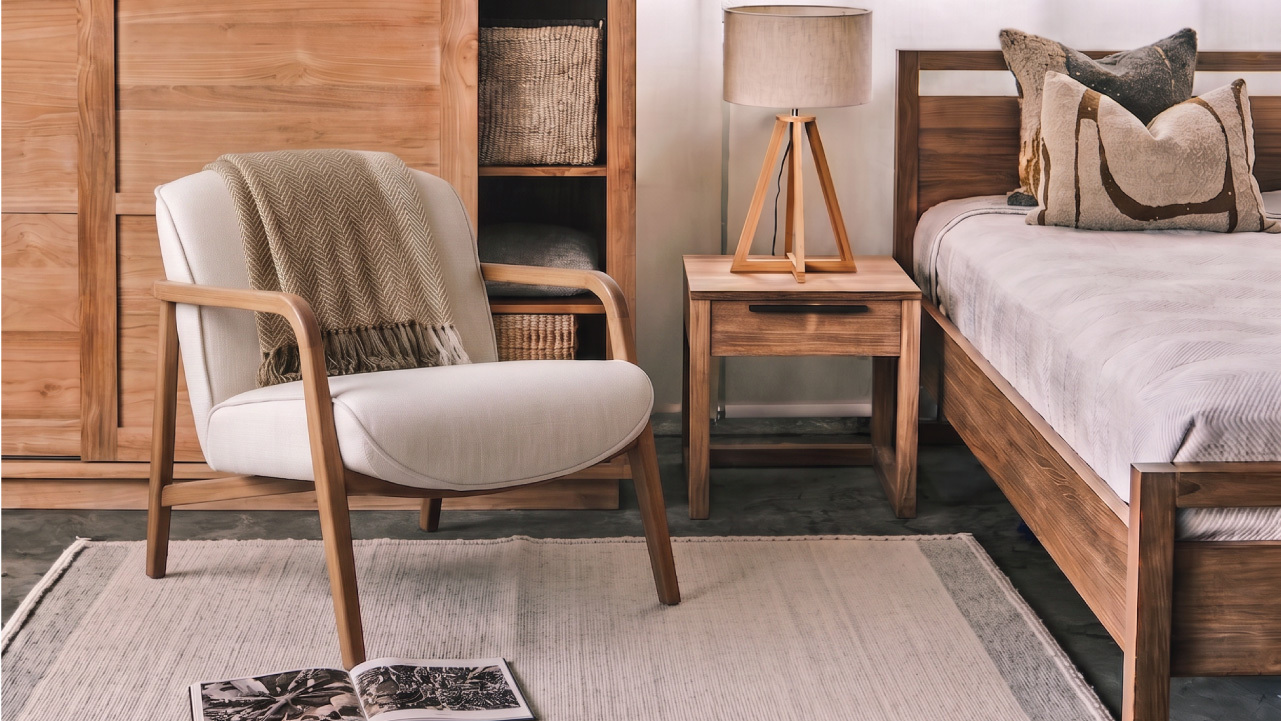
Kate Babington, Managing Director at TREE
“one of my favourite pieces within our armchair range is embrace, which, true to its name, features a sleek, curved back and armrests that gently hug the body for a supportive and comfortable seat. its compact proportions make it especially well-suited to Hong Kong homes, fitting effortlessly into the corners of bedrooms, home offices and living rooms alike. striking yet exceptionally comfortable, embrace brings together sculptural form and everyday functionality, making it a versatile piece that adds character wherever you place it.”
6. caring for your armchair in Hong Kong
an armchair asks for a simple rhythm rather than a regime, and because many of our chairs combine an upholstered seat with a solid wood or woven frame, the rhythm has two halves: keeping the fabric fresh and helping the wood stay comfortable in Hong Kong’s seasons. solid wood needs to stay hydrated in our conditions, and it is happiest when the room around it changes gently rather than abruptly; cushions, for their part, naturally settle into the way you sit, and a regular fluff keeps them full.
Hong Kong · Spring care
Spring humidity is the season to give an armchair a little attention. good airflow around the chair helps both fabric and frame, so leave it a small gap from the wall, and if a dehumidifier or air conditioner runs in the room, the chair benefits as much as you do. in the cooler months, if a home heating system is running, a cup of water placed nearby helps the air stay kind to solid wood.
- vacuum the upholstery weekly: a soft brush attachment and a light hand lift dust from the weave and help prevent pilling.
- fluff the cushions: seat and back cushions settle into shape over time, which is entirely normal; a regular plump keeps them comfortable and looking their best.
- dust the frame: a slightly damp cloth over wooden arms and legs once a week keeps the timber’s surface at its best.
- keep it shaded from strong sun: position the chair out of direct sunlight so both fabric and wood keep their colour; sheer curtains do the work in bright rooms.
- spot clean gently: a slightly damp cloth lifts everyday marks from upholstery; a little colour transferring onto the cloth is normal, and where covers are not removable, professional upholstery cleaners will visit homes and offices in Hong Kong.
for the wooden elements of your chair, the TREEtment manual on our after care page covers solid wood care in full. and if you are ever unsure what your particular chair needs, our team is always happy to talk it through.
what is the difference between an armchair and an accent chair?
the difference is the job, not the construction. an armchair is bought to be sat in daily: the reading seat, the second seat opposite the sofa. an accent chair is chosen first for what it adds to the room: a shape, a texture or a colour the space lacks, with everyday comfort a close second. the same chair can be both; a Lloyd Loom weave or a curved vintage-inspired silhouette accents a room and still earns its keep as a genuinely comfortable seat.
how do I choose an armchair?
decide the job first: reading, lounging, accenting a room, or completing a seating circle. then check the honest numbers; our armchairs are generally 53–64cm wide and lounge and easy chairs 59–115cm, so there is a footprint for almost any corner. then sit in it. seat height, back support and the feel of arms or no arms are personal enough that ten minutes in the chair tells you more than any amount of reading, ours included.
what size armchair suits a small Hong Kong apartment?
smaller than you might fear and bigger than you might guess. the lounge and easy chair family starts at 59cm wide, which fits corners no sofa could approach, whilst even a generous 97cm armchair asks for less space than any two-seater. the better question is placement: a chair angled towards the light makes a compact room feel more open, and one characterful chair with a side table can serve a small apartment as a complete second seating area.
should my armchair match my sofa?
it can, but it doesn’t have to, and contrast is often the stronger choice. a wood-framed or woven chair beside an upholstered sofa gives the room texture, and a bolder fabric on one chair is an easy commitment where the same fabric on a sofa would dominate. keep one thread in common, a tone, a timber or a leg shape, and the pairing will read as considered rather than accidental.
how do I clean an armchair?
little and often. vacuum the upholstery weekly with a soft brush attachment and a light hand, and lift everyday marks with a slightly damp cloth; some colour transferring onto the cloth is normal. wooden arms and legs want a wipe with a slightly damp cloth. where covers are not removable, professional upholstery cleaners in Hong Kong will visit your home, and the TREEtment manual covers the wooden elements in full.
what makes a good reading chair?
support, light and an hour of genuine comfort. look for a back tall enough to support you fully, a seat height towards the upper end of the 38–46cm range so posture stays easy, and arms if you like somewhere to rest a book. place it beside natural light with a side table within reach, and a spare corner of a bedroom or living room becomes the most used seat in the apartment.
what should I look for when buying an armchair?
three things carry most of the decision: a frame built to last, ideally solid wood; fabric rated for real life, with abrasion ratings of 20,000 rubs (Martindale test) or more; and a sit that matches how you actually use a chair, upright or curled up. everything else, style included, follows more easily once those three are settled.